Back in the early NFIRS days, pre-digital, a module was typically a page (or more) of a given paper form … and these modules/forms allowed firefighters to add fire information via the fire module/form, hazmat information, medical and so on … each on separate forms. Firefighters picked the right forms for the incident type. Modules are still used today, to gather information into concepts for that same purpose.
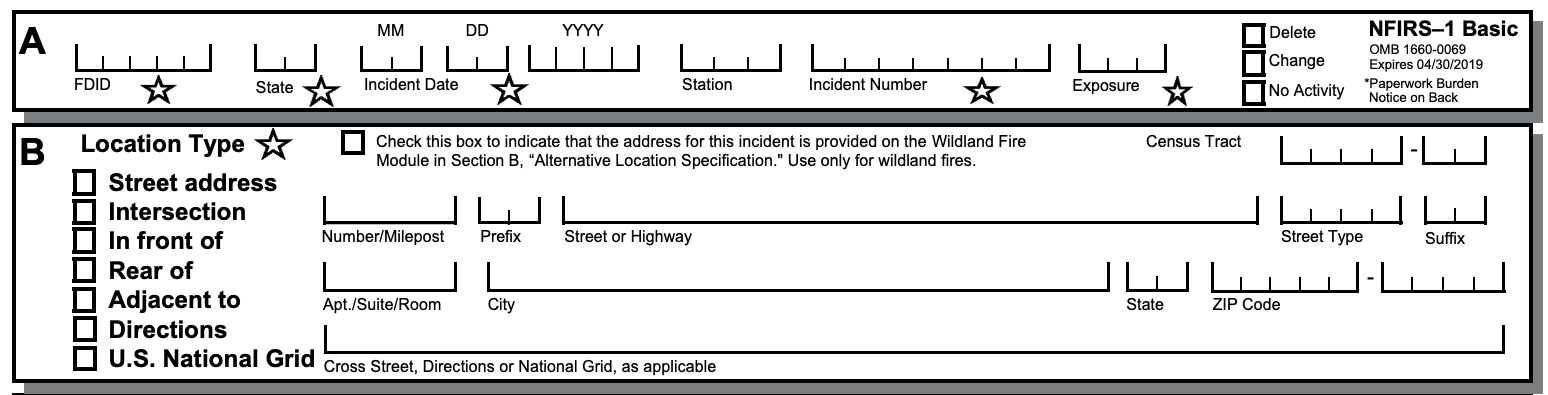
Back in the days of NFIRS paper forms…
NERIS selected the same core modules (fire, rescue, medical, hazard) reducing some of the past focus on materials and storage, and increasing focus on electrical hazards. Power generation, power storage, powered devices (scooters), powered automobiles … these are growing hazards that NERIS wants to inspect. Further, things like CSST & lightning risk made the cut too. NERIS is designed to be flexible to gather the data on dangers we think we are facing, as we face them, so the service can react faster.
What are the NERIS modules?
There are a few shared modules, used within modules above:
And some augmentation modules for extras:
NERIS has pretty much the same modules as NFIRS, since it does the same overall job, however some of the the information might be reorganized into different groupings, and there is a little less information expected in NERIS. This is mainly because other systems (for medical and wildland fire) fill those gaps, and because NERIS wants to focus in other areas.
The NERIS equivalent of the NFIRS resource modules is in the dispatch module and/or the incident core module.
NFIRS “special studies” have been removed in favor of NERIS’s general extensibility, and emerging hazards module.
Get the full information on NERIS from the specification:
Sign up to hear more from Responserack on Volunteer Fire Departments, USFA NERIS and USFA NFIRS.
Responserack provides services for volunteer fire departments; member information services, incident reporting, NFIRS and so much more.